 Aka Journal
Leonard Pesch
Sascha Schneider
I. Introduction
“Linguistics is the scientific study of natural language“ (Huda 1). Alongside other areas of research, the meaning of words in contexts, which the subdiscipline pragmatics concerns itself with, has been researched by many scientists. Especially the difference between the literal, semantic, and the contextual, pragmatic, meaning of words has been in focus. Our work also falls into this category. In politics, the difference between what a word means and its use in context is important, since political speeches are designed with care and are meant to influence the public opinion. However, only looking at the words used in a speech is not enough since “you shall know a word by the company it keeps” (Firth 11)! Therefore, one needs to look at the word’s most frequently used collocations. Because “Few events have dominated global political life in the way that the War on Terror has dominated the past 20 years or so.” (Toros 1), the analysis of the political language used in this War on Terror is particularly interesting. The War on Terror is “a shorthand for military operations in Afghanistan, Iraq and beyond” (Toros 1)
Previous work was already done on the collocations used at the beginning of the Iraq war. At the beginning of the conflict, the media’s way of covering the situation led to war not being connotated with violence or aggression (Lukin 1). Instead, war was connotated with the reasons for the war. Hence, the strongest collocations were lemmas of terror. However, the use of collocations throughout the war was not covered and is still left to be analysed. Moreover, there is no analysis on the antonym of war: peace. We therefore try to answer the question whether Lukin`s theory can be applied on the political discourse for the entire war and whether the collocations of peace show a similar pattern.
II. Literature Review and Terminology
As previously mentioned, collocations are important because a word`s most used collocations reveal the context it is used in. Collocations are defined as “the syntagmatic attraction between two (or more) lexical items. This attraction is most often found between two words.” (Lehecka 2) The extent of this attraction is also called collocation strength. Words with the highest possible collocation strength are always used together and words with the lowest possible collocation strength are never used together.
The relevance for collocation strength was already shown when “the analysis of the media coverage of the 2003 “Coalition invasion of Iraq” (Lukin 1) revealed that war bore no relation to the contour for violence. Furthermore, the meaning of aggression and war seemed to have a contrastive relation and were rarely used together. The absence of these collocations lead to the suggestion that the Coalition’s invasion of Iraq was neither connected with deaths nor brutality. This phenomenon presented itself more clearly, when anti-war protesters were labelled as violent. This was not received as hypocritical by either the media or the general public.
This data is useful, but incomplete. It only covers the first year of the Iraq war (2003-2011). Therefore, it is necessary to revisit this debate and either support or to question the hypothesis that collocations are used to seemingly justify war. This would be the case if war is collocated with the reasons for the war and not with terms such as violence and aggression. Furthermore, the paper only focuses on war and does not present any research about peace, which would be relevant to have a thorough understanding. At last, the importance of the war differs from country to country and the analysis of one language is not able to reflect the diversity of opinion between different countries. Thus a comparison between different corpora is necessary to show wheather Lupin’s observation is unique to the English speaking world.
III. Methodology
This analysis is based on the Europarl Spoken Parallel – English and the Europarl Spoken Parallel – German corpora, whose data is from 1996 to 2011. We deemed a comparison between the two as reasonable because Germany had the most seats at that time (99 in 2011) and English was an important working language. Furthermore, we compared the German and English speakers, because the Germans were not part of the Coalition and opposed the war, while England was part of the Coalition and was in favor of the war. “Multilingual parliaments have been a useful source for monolingual and multilingual corpus collections” (Karaka et al 1). The European Parliament is such a multilingual Parliament. Therefore, the speeches held in the parliament are able to reflect the represented political views.
Sketch Engine was used for their analysis. Additionally, Google Books Ngram Viewer was used to get a broad overview of the general usage of the terms in German and English language and to compare it to the usage in the European Parliament. The data is based on the search terms and lemma war and peace in the Europarl Spoken Parallel – English and in the German version of the Google Books Ngram Viewer and on Krieg and Frieden (German equivalents of war and peace) in the Europarl Spoken Parallel – German and the German version of the Google Books Ngram Viewer.
The four lemmas that were described previously were all entered into the basic concordance search of Sketch Engine. The number of rows in the resulting concordance list was then used to determine the absolute frequencies, while the percentage of the whole corpus is reflected in the relative frequencies. To compare the usage in parliamentary contexts to the general usage, the four lemma were entered into the Google Books Ngram Viewer separately for English and German. The time frame was set to 1996-2011 which is the same that was used in the Europarl corpora. The search for case-sensitive and smoothing was set to 3.
The four terms were then entered into the Word Sketch section of Sketch Engine while using their respective corpora amd the visualizations that Sketch Engine created for them were then exported. Word Sketch’s function to create a list of the most common collocations was used with the four words peace, war, Frieden and Krieg. The strength of these collocations was calculated with “logDice” (Pavel Rychlý 5). LogDice has a maximum value of 14, which can only be reached if the two words always appear together. If the value is zero, then the two words have less than 1 co- occurrence in 16,000 occurrences. If the logDice score of one word is higher by 1 point, then the collocation appears twice as often. For further reference, this is the formula for the logDice value:
logDice = 14+log₂( 2*f(x,y)f(x)+f(y))
where f(x)=Frequency of the first word
and f(y)= Frequency of the second word
The 20 most frequent collocations were exported (see table 3-6 in the Appendix). For further analysis we used these categories:
- Log Dice [rounded to 5 digits] expresses the typicality (or strength) of the collocation
- T-score [rounded to 4 digits] expresses the certainty with which we can argue that there is an association between the words, i.e. their co-occurrence is not random.
- The Mutual Information (MI) score [rounded to 3 digits] expresses the extent to which words co-occur compared to the number of times they appear separately
- Frequency (also absolute frequency) refers to the number of occurrences or hits within +/- 3 Words
- Collocation Frequency [rounded to 3 digits] refers to the total number of hits within the corpus
The 20 most frequent words were then grouped together and marked in each of the four tables. The five categories used for this process are collocations between peace and war themselves, individual countries/regions/wars/peace processes/situations, values/moral/political categories, words that reflect the negative consequences of war and justifications. Every word that could not be assigned to one of those categories remained unmarked.
IV. Results
- Frequency
| War/Krieg | Peace/Frieden | |
| English | 11,357 | 15,165 |
| German | 6,100 | 8,975 |
| War/Krieg | Peace/Frieden | |
| English | 11,357 | 15,165 |
| German | 6,100 | 8,975 |
Table 1: Absolute frequency of war and peace in the English and German Europarl
This table only shows the absolute frequencies of the four terms. This means that this table is limited to comparing both terms in their respective languages. A comparison of one term across languages is not possible because of the different sizes of both corpora. While the Europarl Spoken Parallel – German has a size of 47,805,055 words, the Europarl Spoken Parallel – English is even larger with a size of 53,837,625 words.
Both in English and in German, the terms for peace were used more often than the terms for war. In English, the ratio is app. 1.335, while in German it is an app. 1.471.
| War/Krieg | Peace/Frieden | |
| English | 0.019 % | 0.025 % |
| German | 0.011 % | 0.016 % |
Table 2: Relative frequency of war and peace in the English and German Europarl
When comparing the relative frequencies, you can see that both terms were used less in German than in English. Moreover, peace/Frieden are used more frequently than war/Krieg. The difference in frequency between war and peace is 0.006%, while the difference between Krieg and Frieden is 0,004%.
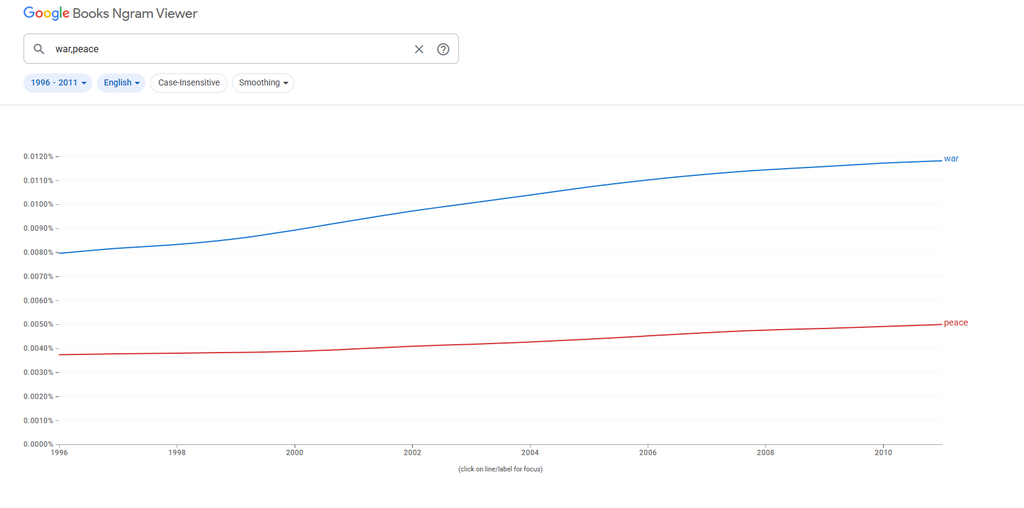
Figure 1: Google books n-gram for war, peace, 1996 – 2011
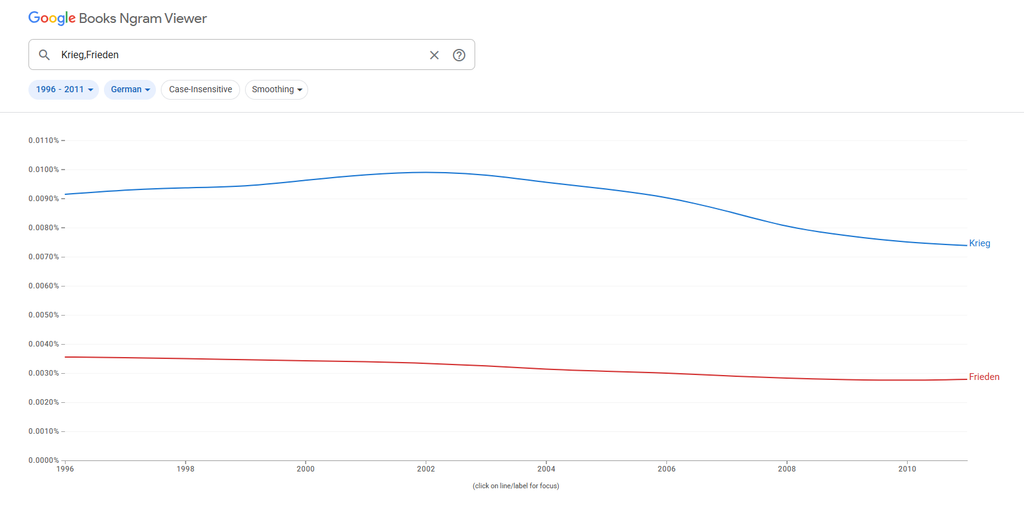
Figure 2: Google books n-gram for Krieg, Frieden, 1996 – 2011
The general usage of the terms that was determined by using Google Books Ngram Viewer contrasts with the results from the European Parliament. Krieg/war was used more often than Frieden/peace in both German and English in the entire time period of 1996 – 2011. In the year 2011, war was used 2.362 times as frequent as peace, while Krieg was used 2.556 times as often as Frieden in German.ntire time period of 1996 – 2011. In the year 2011, war was used 2.362 times as frequent as peace, while Krieg was used 2.556 times as often as Frieden in German.
- Collocations
The following graphics visualise the collocations of war (Figure 3), peace (Figure 4), Frieden (Figure 5) and Krieg (Figure 6). The colours, meaning the colour of the small circle around the word, represent the grammatical form it was used in, while the size of the word, the words are the collocations, represents the frequency.
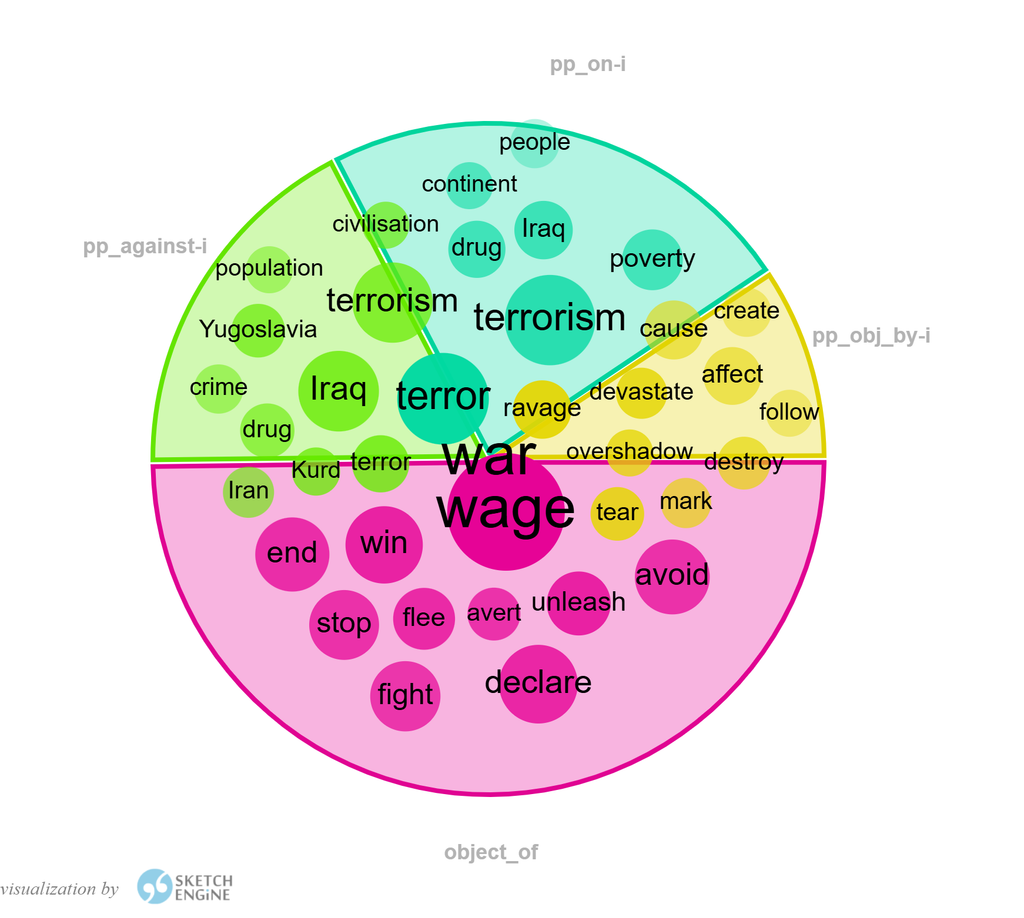
Figure 3: Word sketch visualization for war
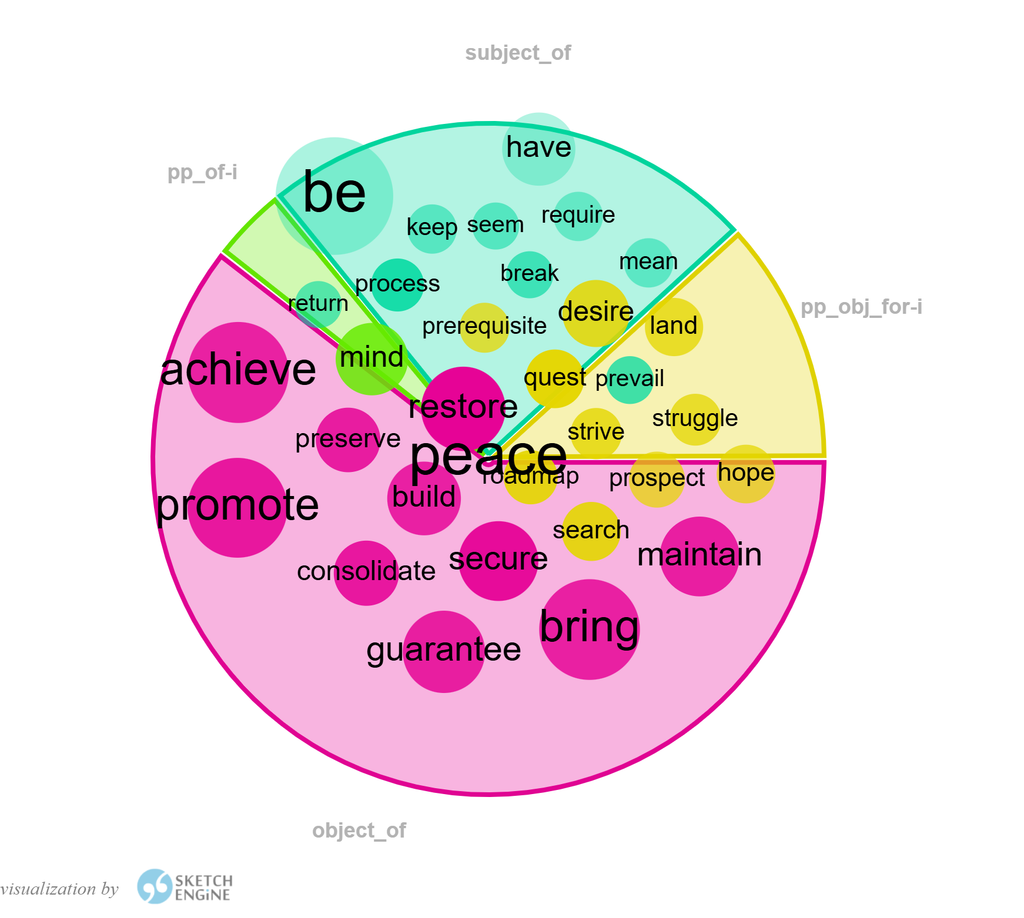
Figure 4: Word sketch visualization for peace
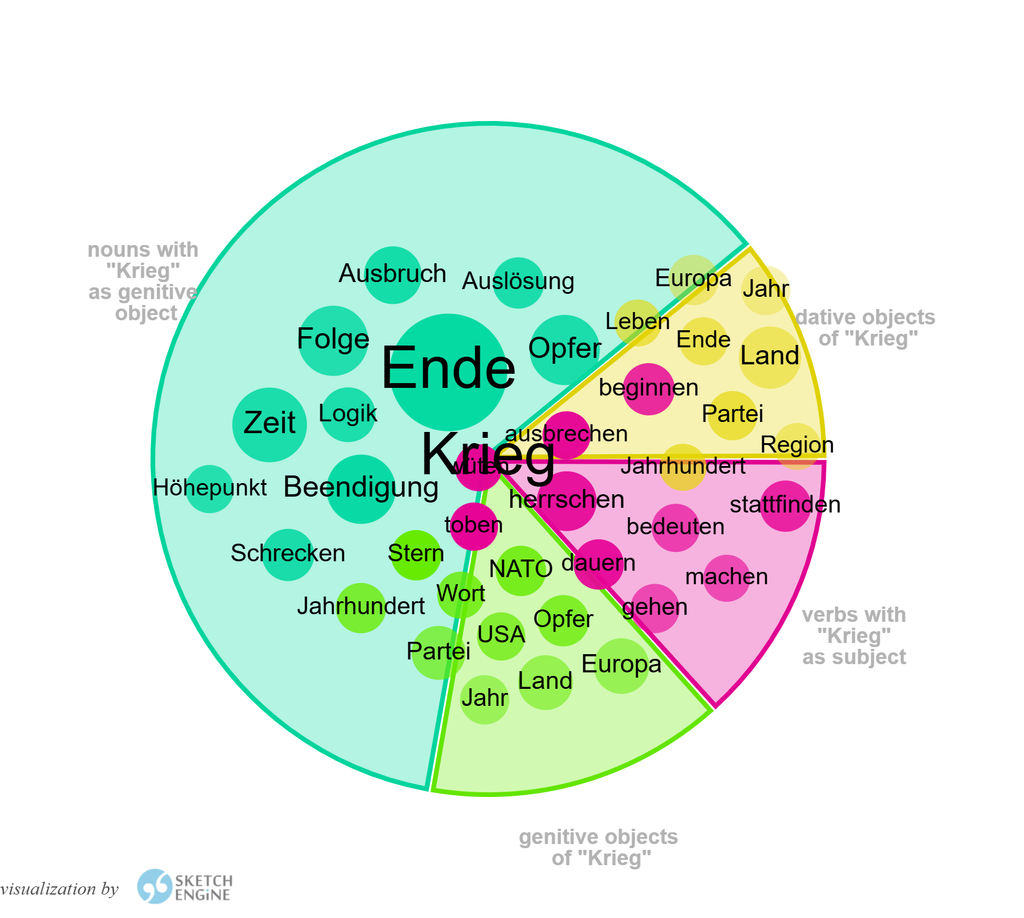
Figure 5: Word sketch visualization for Krieg
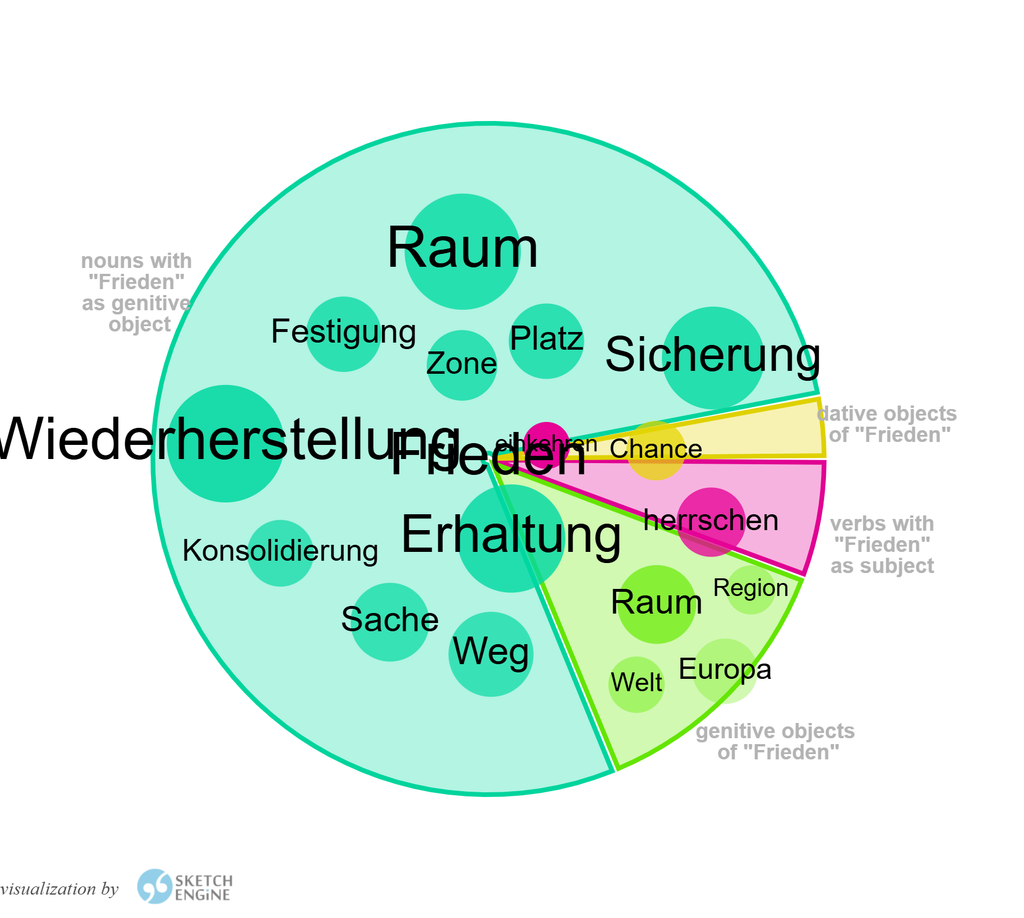
Figure 6: Word sketch visualization for Frieden
The exact data used for this analysis can be found in the appendix (see table 3-6). Process has the biggest collocation strength for peace, while it is Stabilität (=stability) for Frieden. second has the biggest collocation strength for war and Kalten (=cold) for Krieg in German. Another notable point is that the terms end/Ende have very different collocation strengths with war/Krieg. end has a logDice value of the app. 7.3, while Ende has a logDice value of app. 8.4. This means that Ende is used twice as much with Krieg as end with war.
For peace, there are five collocations that could be assigned to the category of individual countries/regions/wars/peace processes/situations, while there are only three for Frieden. There are ten words of this category for war and eight for Krieg. Values/moral/political categories describe six of the 20 strongest collocations of peace and 10 for Frieden. Moreover, stability has a logDice value of app. 10.2 and Stabilität has a logDice value of app. 10.7 which points to a similar use of peace/Frieden in both languages. For both war and Krieg, there are no words that could be assigned to this category. However, there are five collocations of Krieg that describe the negative consequences of war, while there are only two for war. This shows a difference in the way English and German speakers talk about war. The number of collocations that reflect justifications for war is three, while it is two for Krieg.
Finally, the words war/Krieg and peace/Frieden have strong collocations with each other. The collocation strength of Frieden with Krieg is app. 7.8, while the collocation strength of Krieg with Frieden is app. 7.9. In English, war has a logDice value of app. 7.4 with peace. war does not appear in the list of the twenty strongest collocations of peace.
V. Discussion
The contrast between the frequency of the words war/Krieg and peace/Frieden in the Google Books Ngram Viewer and in the Europarl corpus points to the role the European Union sees itself in:
“The European Union has traditionally presented itself as a successful peace project that ensured the reconciliation and peaceful development of Western Europe during the Cold War and subsequent reintegration of divided Europe, bringing about stability and prosperity.“(Natorski 1)
The explicit reference to stability and prosperity as a central goal of the European Union can also be confirmed in our data as these words are both in the seven strongest collocations of peace. Their German equivalents Stabilität and Wohlstand can be found in the five strongest collocations of Frieden.
Overall, the data shows that the negative consequences of war and moral values are emphasized in German language speeches, while speeches in English focus on the technical and neutral aspects of war. The higher frequency of words that point to the negative consequences of war in German language speeches can be explained by the historically high prevalence of pacifism in Germany. Sociological research shows that “the German population is a post-heroic society whose strategic culture is defined by a fundamentally pacifist attitude” (Graf 10).
Additionally, it has to be considered that our data was mainly gathered from two countries that had significant disagreements in security policy at the time (1996-2011). The United Kingdom was part of the Coalition of the Willing in the Second Gulf War and therefore in favor of it, while Germany opposed the invasion of Iraq. There was no reason for German speaking politicians to present the war as justified because Germany opposed the war. Hence, five terms that describe negative aspects of war show up in the 20 most frequent collocations. Conversely, the opposite is true for the English collocations.
Furthermore, it is noticeable that the strongest collocations for war/Krieg are the names of conflicts that ended before the data of the Europarl corpus was gathered. The logDice value for the collocations of war is app. 10.68 for Second and 10.65 for World.These two collocations together form the name Second World War, which ended in 1945. For Krieg the strongest collocation is Kalten with a logDice value of app. 10.9. The Cold War, Kalter Krieg in German, ended in 1991. This also means that these collocations are used twice as often with war/Krieg as Iraq with a logDice value of app. 9.7 (ENG) and app. 9.5 (DE), even though the war happened during the time the corpus data was collected. Hence, it seems as if the political discourse about war in the European Parliament draws from past events. Nevertheless, this data might be influenced by politicians who “frequently use historical analogies to justify their preferred foreign policies” (Blair, Lendeway, Schwartz 1)
VI. Conclusion
The data we have gathered shows that Lukin’s original thesis remains truthful throughout the war for English speakers. Not a single lemma of aggression or violence is frequently collocated with war. Instead, lemmas of the word terror are frequently used, which is what the Coalition of the Willing claimed to fight. However, his findings cannot be transferred over to German speakers. Here, the word Gewalt (=violence) and schrecklich (=terrible) are frequently used with war. Furthermore, the difference in collocation for peace/Frieden is quite small, which aligns with the fact that the European Union sees itself as a peace project. Moreover, peace is most frequently collocated with values and not with reasons for peace. Therefore, we cannot observe a similar pattern with peace as with war.
Since the European Union is a union with supranational elements, we cannot differentiate between politicians who are from non-English speaking countries but still use English in their speeches, and native English speakers from the United Kingdom, Malta or Ireland. Moreover, a differentiation between these three countries is not possible. The data is therefore distorted to some extent. Furthermore, our data was collected from 1996 to 2011. This means we cannot analyze changes inside this time period. Furthermore, we cannot detect subtle changes. Moreover, if there would have been a change in collocations or frequencies toward the end, we would not have been able to detect it. The categorization by which the data from tables 3-6 was analyzed is ambiguous. Words like terror or Terrorismus could also be included in the category about “negative consequences of war”. However, the word was mostly used as a part of the term war on terror. This served as a justification for starting several wars, especially in the time period of 1996-2011 when the data was collected.
Further research could focus on the language other countries used. We looked at the language of a country which was part of the Coalition and a country which opposed the war, but did not actively fight against the Coalition. Because of the differences in collocation strength between these two countries, one could assume that there might be even larger differences to other countries. Furthermore, we did not focus on data from two opposing countries. The extent of differences between two opposing countries could be another interesting aspect for further research.
VII. References
Blair, C., Lendway, P., & Schwartz, J. A. (2026). “Historical Analogies and Public Support for Foreign Policy Action”. Journal of Conflict Resolution, 70(7-8), 1245-1273.
Firth, J. R. (1957). “Studies in Linguistic Analysis”. Basil Blackwell.
Graf, T. (2024) “Suddenly Ready for War? German pacifism in the „Zeitenwende“. Ethics and Armed Forces: Controversies in Military Ethics and Security Policy, Issue 2/2024. pp. 10-21
Huda, K. (2018). Linguistics. Dar el-Ilmi: Jurnal Studi Keagamaan, Pendidikan dan Humaniora, 5(1), 200-208.
Karakanta, A., Vela, M., & Teich, E. (2018). “Europarl-uds: Preserving and extending metadata“ in parliamentary debates. Parla CLARIN: „Creating and Using Parliamentary Corpora.”
Lehecka, T. (2015) “Collocation and colligation”. Handbook of Pragmatics 2015
Lukin, A. (2013) “The meanings of „war“: „from lexis to context”. Journal of Language and Politics Volume 12, Number 3 (pp. 424-444)
Natorski, M. (2011). “The European Union Peacebuilding Approach: Governance and Practices of the Instrument for Stability”. PRIF-Report No. 111
Rychlý, P. (2008). “A Lexicographer-Friendly Association Score”. Raslan (pp. 6-9).
Toros, H. (2025). “What the ‘War on Terror’ leaves behind: Assessing international security in a post-terrorism era”. European Journal of International Security, Volume 10, Special Issue 1 (pp. 1-8)
VIII. Appendix
General legend for all four tables:
Collocations between “peace” and “war” themselves/synonyms
Individual countries/regions/wars/peace processes/situations
Values/moral/political categories
words that reflect the negative consequences of war
justifications
none of the above
| Collocation | Frequency | Collocation frequency | T-score | Mutual information score | Log Dice |
| process | 2519 | 32,368 | 50.0286 | 8.284 | 10.762 |
| stability | 916 | 9,538 | 30.1868 | 8.587 | 10.2468 |
| Middle | 719 | 4,500 | 26.7723 | 9.322 | 10.2265 |
| lasting | 412 | 1,776 | 20.2759 | 9.86 | 9.63827 |
| East | 390 | 6,907 | 19.6611 | 7.821 | 9.1774 |
| security | 726 | 27,490 | 16.6897 | 6.725 | 9.1234 |
| prosperity | 291 | 2,798 | 17.0178 | 8.702 | 9.05213 |
| reconciliation | 215 | 1,467 | 14.6379 | 9.197 | 8.72652 |
| Nobel | 192 | 438 | 13.8485 | 10.778 | 8.65543 |
| democracy | 370 | 17,291 | 19.011 | 6.421 | 8.54518 |
| Prize | 177 | 906 | 13.2871 | 9.612 | 8.49543 |
| live | 219 | 7,295 | 14.6756 | 6.91 | 8.31972 |
| freedom | 281 | 16,653 | 16.515 | 6.079 | 8.17687 |
| bring | 248 | 13,944 | 15.527 | 6.155 | 8.12502 |
| Northern | 144 | 2,383 | 11.9504 | 7.919 | 8.07091 |
| region | 250 | 13,325 | 15.5694 | 6.03 | 8.06974 |
| talks | 144 | 4,072 | 11.9153 | 7.146 | 7.93833 |
| justice | 148 | 7,990 | 12.0016 | 6.213 | 7.71042 |
| Israel | 132 | 5,907 | 11.3608 | 6.484 | 7.68135 |
| promote | 163 | 11,108 | 12.5499 | 5.877 | 7.66743 |
| world | 294 | 33,986 | 16.6516 | 5.115 | 7.61474 |
| plan | 146 | 11,098 | 11.8537 | 5.72 | 7.50908 |
| agreement | 293 | 39,988 | 16.5486 | 4.912 | 7.47 |
| towards | 195 | 21,132 | 13.5864 | 5.208 | 7.45977 |
| restore | 92 | 1,975 | 9.5402 | 7.544 | 7.45848 |
Table 3: Collocations of peace.
| Collocation | Frequency | Collocation frequency | T-score | Mutual information score | Log Dice |
| Second | 649 | 1,640 | 25.4634 | 11.047 | 10.67618 |
| World | 869 | 6,391 | 29.4383 | 9.506 | 10.64784 |
| civil | 743 | 9,983 | 27.1896 | 8.637 | 10.15595 |
| Cold | 337 | 340 | 18.3541 | 12.372 | 9.88275 |
| crimes | 423 | 3,334 | 20.5367 | 11.0 | 9.88187 |
| Iraq | 451 | 5,564 | 21.1878 | 8.76 | 9.77046 |
| criminals | 165 | 1,332 | 12.8258 | 9.372 | 8.73503 |
| terror | 152 | 969 | 12.3141 | 9.712 | 8.65851 |
| terrorism | 240 | 9,474 | 15.3776 | 7.082 | 8.56045 |
| cold | 138 | 657 | 11.7369 | 10.133 | 8.5561 |
| waged | 128 | 285 | 11.309 | 11.23 | 8.49295 |
| Gulf | 129 | 695 | 11.3464 | 9.955 | 8.45424 |
| against | 592 | 49,664 | 23.9494 | 5.993 | 8.31244 |
| waging | 91 | 158 | 9.5363 | 11.588 | 8.01657 |
| wage | 101 | 1,514 | 10.0217 | 8.479 | 8.00637 |
| Chechnya | 100 | 1,573 | 9.9706 | 8.409 | 7.98542 |
| during | 227 | 18,974 | 14.8311 | 6.0 | 7.93804 |
| II | 105 | 3,093 | 10.1905 | 7.504 | 7.89546 |
| prisoners | 78 | 2,315 | 8.7828 | 7.494 | 7.54647 |
| Kosovo | 99 | 6,057 | 9.8361 | 6.45 | 7.5414 |
| after | 184 | 21,716 | 13.2653 | 5.502 | 7.5102 |
| peace | 128 | 14,163 | 11.0797 | 5.595 | 7.36066 |
| Yugoslavia | 66 | 1,948 | 8.07921 | 7.502 | 7.34471 |
| pre-emptive | 57 | 154 | 7.54602 | 10.951 | 7.34216 |
| end | 194 | 27,925 | 13.5535 | 5.216 | 7.33833 |
Table 4: Collocations of war.
| Collocation | Frequency | Collocation frequency | T-score | Mutual information score | Log Dice |
| Stabilität | 807 | 6,413 | 28.3711 | 9.597 | 10.74691 |
| dauerhaft | 341 | 1,171 | 18.4559 | 10.808 | 10.105 |
| Nahen | 293 | 3,415 | 17.0848 | 9.045 | 9.59787 |
| Osten | 298 | 4,602 | 17.2194 | 8.639 | 9.49029 |
| Wohlstand | 226 | 2,765 | 15.0034 | 8.975 | 9.30103 |
| Sicherheit | 642 | 26,080 | 25.1705 | 7.244 | 9.2291 |
| Freiheit | 274 | 8,415 | 16.4704 | 7.647 | 9.01206 |
| Demokratie | 359 | 16,489 | 18.8059 | 7.066 | 8.85167 |
| Versöhnung | 122 | 622 | 11.0362 | 10.238 | 8.70237 |
| Region | 252 | 12,756 | 15.744 | 6.926 | 8.56981 |
| Gerechtigkeit | 123 | 2,497 | 11.054 | 8.244 | 8.45669 |
| gerechten | 94 | 846 | 9.6912 | 9.418 | 8.29293 |
| Wiederher-stellung | 97 | 1,454 | 9.8249 | 8.682 | 8.2516 |
| leben | 140 | 6,548 | 11.7423 | 7.04 | 8.20716 |
| keinen | 171 | 13,685 | 12.9067 | 6.295 | 7.94999 |
| Krieg | 92 | 4,120 | 9.5219 | 7.103 | 7.84683 |
| Sicherung | 74 | 1,871 | 8.567 | 7.928 | 7.80458 |
| Erhaltung | 72 | 2,297 | 8.4413 | 7.592 | 7.70947 |
| Wohlstand | 59 | 525 | 7.6700 | 9.434 | 7.66893 |
| Förderung | 138 | 13,482 | 11.5609 | 5.978 | 7.65365 |
| dauerhaft | 56 | 228 | 7.4784 | 10.562 | 7.63947 |
| Aussöhnung | 55 | 478 | 7.4057 | 9.468 | 7.5748 |
| Kontinent | 60 | 2,321 | 7.6973 | 7.314 | 7.44337 |
| Israel | 70 | 4,634 | 8.2766 | 6.539 | 7.39701 |
| schaffen | 118 | 14,754 | 10.6422 | 5.622 | 7.34828 |
Table 5: Collocations of Frieden.
| Collocation | Frequency | Collocation frequency | T-score | Mutual information score | Log Dice |
| Kalten | 368 | 369 | 19.1812 | 13.141 | 10.86423 |
| Irak | 249 | 4,671 | 15.7471 | 8.915 | 9.56514 |
| Ende | 226 | 14,232 | 14.9214 | 7.07 | 8.43945 |
| Tschetsche-nien | 77 | 1,407 | 8.75726 | 8.953 | 8.39277 |
| gegen | 538 | 51,419 | 22.9501 | 6.566 | 8.25971 |
| Terror | 63 | 688 | 7.9277 | 9.696 | 8.24851 |
| kalten | 49 | 123 | 6.9981 | 11.817 | 8.01132 |
| Frieden | 95 | 7,143 | 9.6659 | 6.912 | 7.87691 |
| Jugoslawien | 55 | 1,574 | 7.3928 | 8.306 | 7.8756 |
| Terrorismus | 97 | 7,595 | 9.7637 | 6.854 | 7.85855 |
| Beendigung | 42 | 973 | 6.4642 | 8.611 | 7.60421 |
| schmutzig | 36 | 102 | 5.9981 | 11.642 | 7.57141 |
| Afghanistan | 50 | 2,812 | 7.0272 | 7.331 | 7.52232 |
| Kalte | 33 | 35 | 5.7439 | 13.06 | 7.46155 |
| geführt | 83 | 9,442 | 8.9960 | 6.315 | 7.45115 |
| Konflikte | 43 | 2,255 | 6.5195 | 7.432 | 7.39784 |
| Konflikten | 35 | 1,203 | 5.8936 | 8.042 | 7.29501 |
| führen | 106 | 17,865 | 10.104 | 5.748 | 7.17928 |
| Kosovo | 50 | 5,259 | 6.9888 | 6.425 | 7.17104 |
| Opfer | 56 | 7,256 | 7.3763 | 6.127 | 7.10215 |
| Gewalt | 61 | 8,965 | 7.6835 | 5.946 | 7.05182 |
| während | 93 | 18,720 | 9.4293 | 5.492 | 6.93994 |
| fliehen | 22 | 308 | 4.6832 | 9.338 | 6.81377 |
| imperialistisch | 22 | 371 | 4.6817 | 9.069 | 6.79966 |
| schrecklich | 24 | 1,004 | 4.8764 | 7.758 | 6.79055 |
Table 6: Collocations of Krieg.